 World on the Brink
Media & Events
Silverado’s News, Media & Events hub brings together the organization’s latest news, press releases, public announcements, podcasts, videos, and event coverage in one centralized destination. This page provides timely insights into Silverado’s work, expert commentary, and public engagements across all policy areas. Explore multimedia content and stay informed about newly released analysis, discussions, and upcoming convenings.
 Silverado
Financing the Next Critical Minerals Frontier: AI & Advanced Innovation
On March 11, 2025, Silverado Policy Accelerator, together with the Hamm Institute for American Energy, Emerson Collective, and Meridian International Center, convened leaders from government, industry, and finance for a discussion on Financing the Next Critical Minerals Frontier: AI and Advanced Innovation. As demand for critical minerals accelerates alongside the rapid growth of artificial intelligence, electrification, and advanced technologies, the conversation focused on how the United States and its partners can mobilize capital, accelerate innovation, and build more resilient supply chains. Fireside Chat with Senator Hagerty The program opened with a fireside chat featuring Senator Bill Hagerty and Ann Bluntzer Pullin of the Hamm Institute for American Energy, who discussed the importance of permitting reform, investment, and stronger partnerships with allies to advance American mineral security. Fireside Chat with Brandon Remington, Department of Commerce Ann Bluntzer Pullin moderated a fireside chat with Brandon Remington, Deputy Under Secretary for Policy at the International Trade Administration, Department of Commerce, to discuss the Department’s work to strengthen U.S. critical minerals supply chains. The conversation explored the Commerce Department’s role in advancing domestic production and processing, supporting strategic partnerships with allies, and deploying trade and industrial policy tools to reduce supply chain vulnerabilities. Panel: Critical Minerals Policy: Q&A with Administration Officials A conversation with administration officials followed, exploring how the U.S. government is approaching critical minerals policy across trade, diplomacy, and innovation. The discussion was moderated by Sarah Stewart, CEO of Silverado Policy Accelerator, and featured: Justin Hoffmann, Office of the United States Trade Representative (USTR) Christopher Saldaña, U.S. Department of Energy Reggie Singh, U.S. Department of State Panel: Artificial Intelligence as a Strategic Driver for Critical Minerals A second panel examined how artificial intelligence is reshaping critical minerals demand and supply chains. The discussion was moderated by Mahnaz Khan of Silverado Policy Accelerator and featured: Russ Headlee, U.S. Department of State Brien Beattie, Amazon Web Services (AWS) Shayne Bennett, Applied Materials Greg Bowman, USA Rare Earth Toby Spittle, Glencore Panel: Financing the Next Critical Minerals Frontier The program concluded with a discussion on financing the next generation of mining and processing technologies, moderated by Michael Bruce of Emerson Collective, with: Kenan Arkan, JPMorgan Brian Falik, Mercuria Raef Sully, Lilac Solutions Jeff Wilson, Export-Import Bank of the United States Key Takeaways: AI Infrastructure Will Drive Surging Demand for Critical Minerals The rapid expansion of artificial intelligence is dramatically increasing demand for advanced chips, semiconductor manufacturing equipment, energy, and the critical minerals that underpin these technologies. Key materials include rare earth elements used in high performance magnets that support cooling and precision systems in data center infrastructure; copper required for power grids and electrical systems; and minerals such as tungsten and graphite used in semiconductor manufacturing equipment and thermal management applications. As AI deployment accelerates, ensuring secure and diversified supply chains for these minerals across extraction, processing, and manufacturing will be essential to sustaining both AI infrastructure and broader industrial capacity. At the same time, recycling and reprocessing critical minerals from decommissioned electronics and data center equipment will become increasingly important. Expanding domestic recycling capacity can reduce dependence on foreign supply while strengthening the resilience of U.S. critical mineral supply chains needed to support future AI growth. Closing the “Micro-Valleys of Death” in Critical Mineral Technologies A key takeaway from the discussion is that financing innovative critical mineral technologies remains one of the central challenges in building resilient supply chains. While early-stage technologies can often raise venture capital for research, development, and pilot projects, scaling from pilot to commercial deployment is far more difficult. Rather than a single “valley of death,” many companies encounter multiple micro-valleys of death where innovative technologies struggle to reach a minimum sufficient scale due to gaps in financing, permitting, and market certainty. Debt financing for first-of-a-kind (FOAK) facilities that produce commodities with prices manipulated by an adversarial state is nearly impossible to secure, particularly difficult to secure, and private equity and project finance traditional capital typically enter only once technologies are proven at commercial scale. To overcome these barriers, investors need stable, long-term demand signals or performance risk support for a FOAK facility that justifies committing capital to early infrastructure-intensive projects that have yet to benefit from Wright’s Law (e.g., learning curves). Government-backed initiatives such as Project Vault, the Department of Energy’s Innovation Program, or the Department of Commerce’s Investment Accelerator can help create durable demand signals and provide cross-administration stability. Ultimately, the most successful model combines public and private capabilities, where government financing helps balance risk that the private sector struggles to absorb because it cannot capture the public good externalities, aggregate demand, and crowd in private capital to scale critical mineral technologies. Reshaping Allied Critical Mineral Supply Chains from Just-in-Time to Just-in-Case Strategic and coordinated approaches, such as State Department initiatives like the Forum on Resource Geostrategic Engagement (FORGE) and Pax Silica, are becoming essential to securing critical mineral and AI supply chains. As industries move from “just-in-time” to “just-in-case” supply chains, governments and companies are increasingly prioritizing coordinated tools such as stockpiling, demand aggregation, project financing, and international partnerships to ensure reliable access to critical minerals. This shift reflects a broader evolution in allied critical mineral policies, moving beyond domestic incentives toward deeper global supply chain coordination. Alongside financing, stockpiles, and project development, the United States is working with trusted partners to build a plurilateral system that can help reshape global mineral markets, reduce dependence on predatory or distorted supply, and strengthen resilient supply chains. More broadly, the intersection of AI development and critical minerals highlights the need for strategic industrial coordination and international cooperation, including through the Department of Commerce’s AI Export Program. Securing these supply chains will require system-level policy thinking that goes beyond siloed sector approaches, with collaboration across government, industry, and allied partners to share best practices, mobilize investment, and ensure stable and resilient supply. Trade Policy as a Tool to Stabilize Critical Mineral Prices Trade policy is increasingly being used as a tool to de-risk private investment in Western critical mineral supply chains. Protecting mining and processing investments in the United States and allied countries from price suppression, volatility, and market distortions is becoming a growing focus of trade strategy. One emerging approach is the development of coordinated price floor mechanisms for critical minerals, designed to provide greater market certainty for investors. Through potential plurilateral trade arrangements, the United States and its partners are exploring ways to implement adjusted import prices at the border to counter artificially lowpriced minerals entering global markets, particularly from China, as the recent critical minerals 232 investigation outlined. Such measures could help establish a minimum, market-consistent price across participating economies, supporting the economic viability of new mining and processing projects while strengthening resilient supply chains. Permitting Bottlenecks Stand in the Way of AI and Innovation Expanding domestic mining, smelting, and processing capacity is essential to supporting the rapid growth of AI infrastructure and the advanced technologies that depend on critical minerals. However, the development of these projects is often constrained by lengthy permitting timelines, regulatory fragmentation, and the capital intensity required to build new facilities. Early-stage projects and pilot technologies frequently face overlapping federal and state requirements that can stall progress even after successful technological development. As demand for minerals tied to AI, advanced manufacturing, and next-generation innovation continues to rise, streamlining permitting processes will be critical to accelerating domestic production. Policies that improve federal-state coordination, reduce duplicative regulatory requirements, and empower decision-makers to move projects forward can help ensure that promising technologies and mineral projects are able to scale. Addressing permitting bottlenecks will be key to enabling integrated mineral value chains in the United States and allied countries, supporting both innovation and the infrastructure needed to power the AI economy. Harness AI to streamline permitting review workflows.
 Third-party
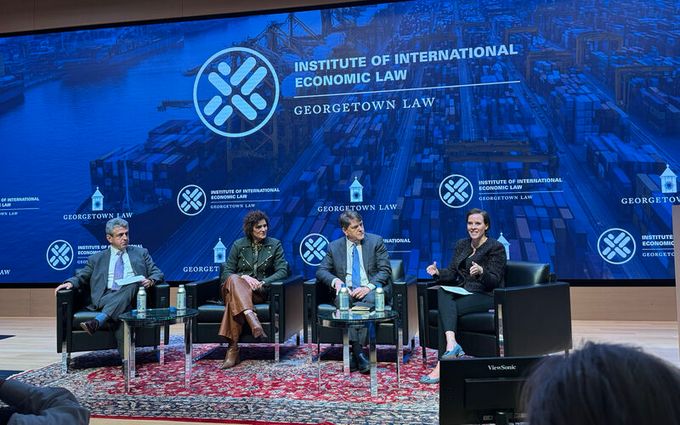
Maureen Hinman Speaks on Georgetown Law's "Strategic Counsel at Lighting Speed" Panel
Ms. Hinman discussed how rapidly evolving trade agreements and tools are reshaping strategic counsel for practitioners and their clients.
 Silverado
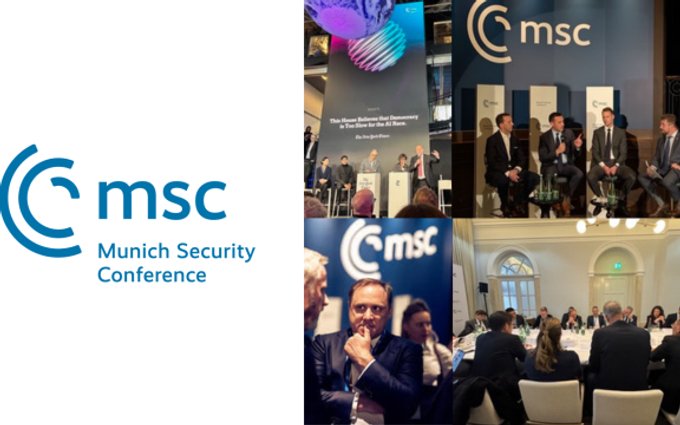
Key Engagements at the 62nd Annual Munich Security Conference
12th Annual Cybersecurity Conference
 Third-party
Silverado Speaks on Panel at Mining Indaba
"Critical Minerals Investment in a Post-Tariff Global Economy"
 Silverado Insights
China’s Export Controls on Bismuth: Assessing the Impact on Production and Trade
China implemented export controls on bismuth in February 2025, requiring export licenses for bismuth metal and certain other bismuth products.
 In-the-News
Dmitri Alperovitch Joins Scripps News on Russia's Role in Iran
Dmitri Alperovtich Joins Scripps News: Is Russia the Winner of the Iran War So Far?
 Third-party
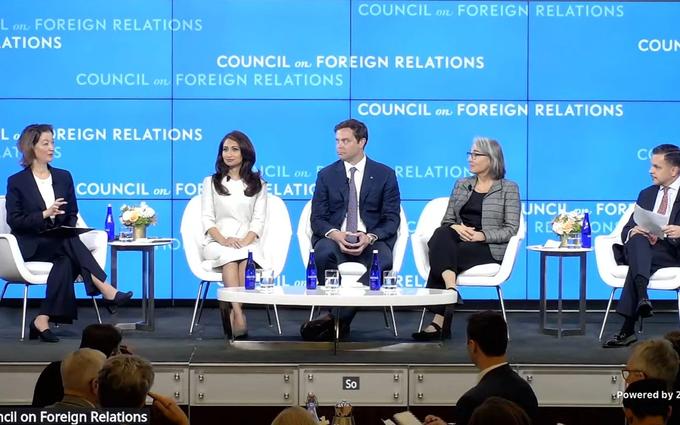
CFR Hosts Launch Event for Joint CFR-Silverado Policy Accelerator Report
Leapfrogging China’s Critical Minerals
 Silverado Insights
Inside China's New 15th Five-Year Plan
China’s new 15th Five-Year Plan targets acceleration of scientific breakthroughs and economy-wide AI integration, prioritizing indigenized tech supremacy as a key national security goal